
Monitoring Your Pain During Exercise: When to Stop
I’ve often heard people say, “No pain, no gain.”
Is that really true?
Personally, I believe pain is an important indicator that helps you know when to slow down, adjust your technique, or stop. It’s essential to understand the difference between good pain (normal muscle sensations during exercise) and bad pain (a warning sign that something isn’t right, especially nerve-related pain).

Note: Neural symptoms can appear 6–8 hours after the aggravating activity. This is especially common with back pain, making it difficult to pinpoint the exact cause of the flare-up.
What Is Common Pain During Exercise and Sport?
Some discomfort is normal during or after exercise. Here are the most common sensations that are generally considered safe:
1. Delayed Onset Muscle Soreness (DOMS)
Usually begins 12–24 hours after exercise
Peaks around 24–72 hours
Feels like muscle soreness, stiffness, tightness, or mild aching
Common after trying new exercises or increasing intensity
DOMS is a normal response to muscle strengthening and does Not mean you have injured yourself.
2. Mild Muscle Fatigue or Burning
Occurs during higher-intensity exercise
Caused by temporary buildup of metabolic (like lactate)
Should resolve quickly once you stop or reduce intensity
This sensation should:
Fade quickly once you stop or rest
Not feel sharp or localised inside a joint
Not last hours after the exercise
Improve as your strength and endurance build
Short-term fatigue is a sign that the muscle is being challenged and adapting — which is exactly what helps you get stronger over time.
3. Gentle Stretching Discomfort
A mild pulling sensation
Should feel controlled and should not linger after the stretch
When Should I Stop? (Signs of “Bad” Pain)
Stop exercising and reassess if you feel:
Sharp or sudden pain (stabbing or catching), which may indicate a strain, sprain, or joint irritation
Pain that worsens the longer you continue exercising
Deep, achy, or localised joint pain (knee, hip, shoulder, ankle)
Pain that alters your movement, such as limping or shifting weight
Swelling or excessive warmth around a joint
Neural symptoms, such as tingling, numbness, shooting pain, or pain radiating down the arm or leg
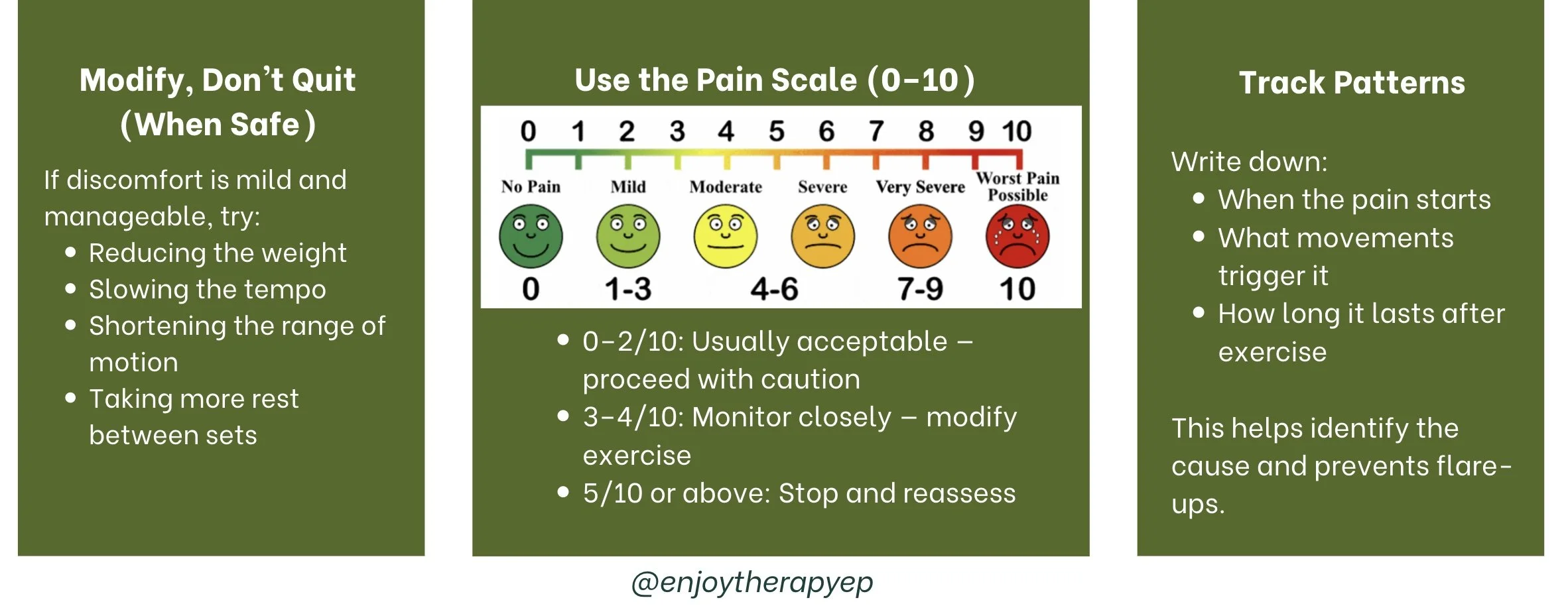
How to Manage Discomfort Safely
When to Seek Professional Help
Consult an Exercise Physiologist or health professional if you experience:
Pain lasting more than 3–5 days, or chronic pain persisting for more than 6 months
Pain that keeps returning during the same exercise or movement
Increasing swelling or stiffness
Difficulty doing daily activities
Persistent nerve symptoms
Final Thoughts
Exercise should make you stronger, not injured. Understanding the difference between normal exercise discomfort and harmful pain empowers you to train safely and confidently. Listen to your body — it’s usually telling you something important.
If you need professional guidance from an Exercise Physiologist to create a safe, tailored, and pain-free exercise plan, please call our team in Cooks Hill - 0416 868 787