Physio, Exercise Physiologist or Personal Trainer: Who Should You See?
One of the most common questions I hear from people in the gym is:
"What's the difference between a Physiotherapist, an Exercise Physiologist, and a Personal Trainer?"
The truth is that all three professionals play an important role in helping people move better, feel stronger, and improve their health. However, they each have different areas of expertise.

Physiotherapist: When Pain or Injury Is New
A Physiotherapist is often the best person to see when you have a new injury, significant pain, or have recently had surgery.
Physiotherapists are trained to assess, diagnose, and treat musculoskeletal conditions. They may use hands-on techniques, manual therapy, and rehabilitation exercises to help reduce pain and restore movement.
You may benefit from seeing a Physiotherapist if:
You have recently injured yourself
You are experiencing significant pain
You have had surgery and need early rehabilitation
You need an assessment and diagnosis of a musculoskeletal problem
Think of a Physiotherapist as the professional who helps you get moving again after an injury.
Exercise Physiologist: When You Need Exercise as Medicine

An Exercise Physiologist (EP) specialises in using exercise as medicine to manage injuries, chronic conditions, and long-term health concerns.
Many people see an EP after they have completed the initial stage of treatment with a Physiotherapist, or when they need ongoing support to build strength, mobility, function, and confidence.
Exercise Physiologists commonly work with people who have:
Musculoskeletal Injuries
Diabetes
Osteoporosis
Arthritis
Heart disease
Chronic pain
Obesity
Balance problems
Neurological conditions
Work-related injuries
At Enjoy Therapy Exercise Physiology, my focus is not only helping people recover from injury but also helping them return to the activities they enjoy and maintain their independence for years to come.
Think of an Exercise Physiologist as the professional who helps bridge the gap between rehabilitation and everyday life—using exercise to restore strength, improve function, rebuild confidence, and create lasting habits that support long-term health and independence.

Personal Trainer: When Your Goal Is General Fitness
A Personal Trainer is ideal for people who are generally healthy and want help achieving fitness goals.
Personal Trainers can help with:
Weight loss
Strength training
Fitness improvement
Gym technique
Accountability and motivation
They are excellent at helping people stay consistent and work towards performance and fitness goals.
Think of a Personal Trainer as the professional who helps you maximise your fitness and performance.
So, Who Should You See?
A simple guide:
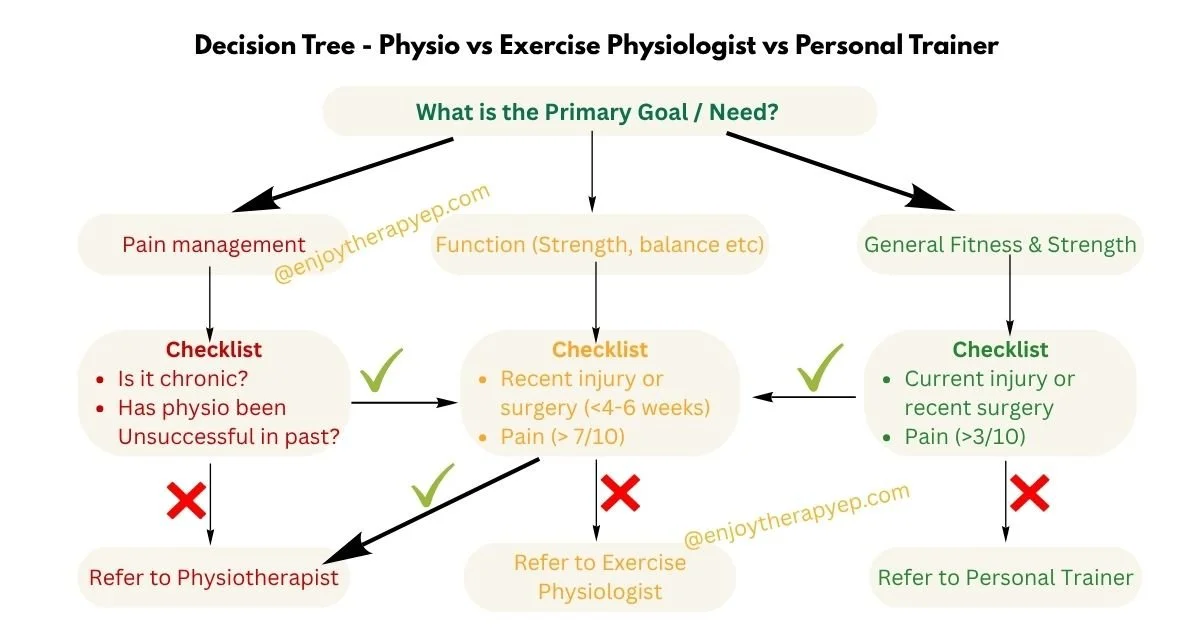
Choosing the right professional can significantly impact your outcomes. This decision tree is designed to help direct you to the most appropriate practitioner based on your current needs and goals.
Why They Often Work Together
Rather than competing with one another, Physiotherapists, Exercise Physiologists, and Personal Trainers often work together.
For example:
A Physiotherapist may help someone recover from a knee injury, restore pain-free range of motion.
An Exercise Physiologist may then help rebuild strength, muscle control, joint stability, function, and confidence.
A Personal Trainer may help maintain long-term fitness once rehabilitation is complete.
Each professional brings unique skills to support your health journey.